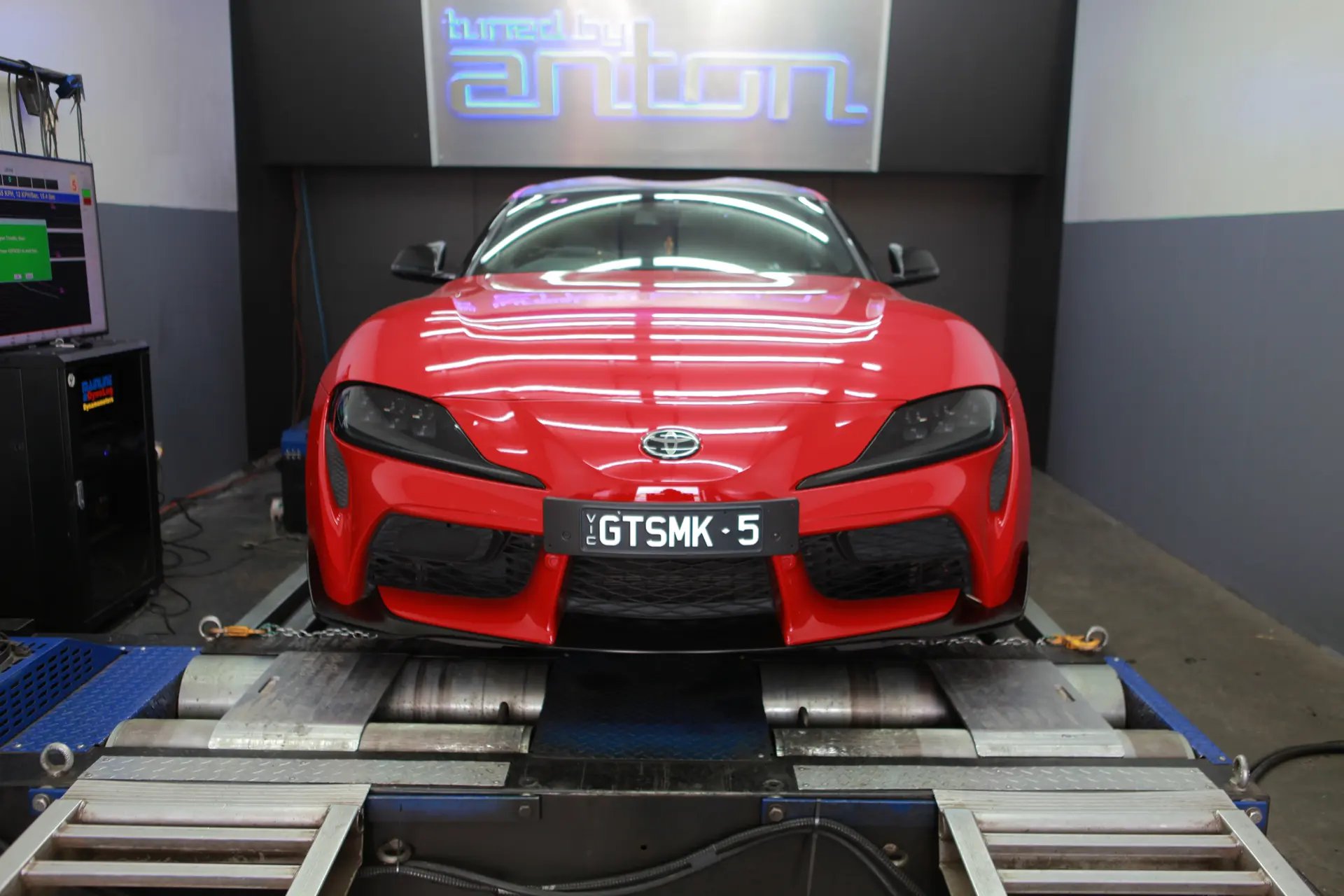
Toyota Tuning Melbourne
Supra A90, GR Yaris, GR86, Hilux N70 and N80 diesel, LandCruiser and Corolla GR — B58, 2JZ, G16E-GTS and 1GD platforms all tuned on our Mainline AWD dyno. OEM and standalone ECU available.
Toyota Dyno Results
Your Toyota Dyno Tuning Specialists.
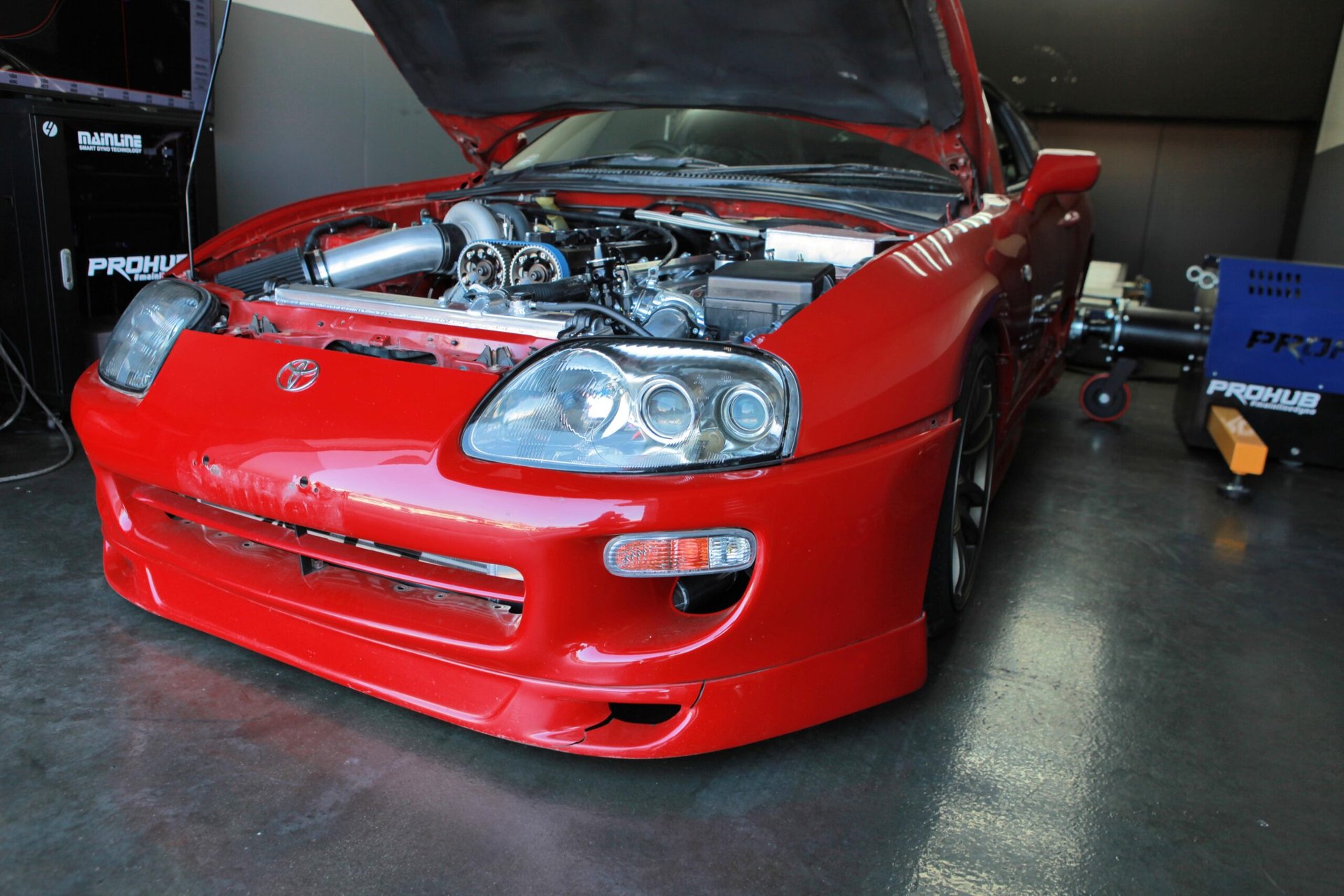
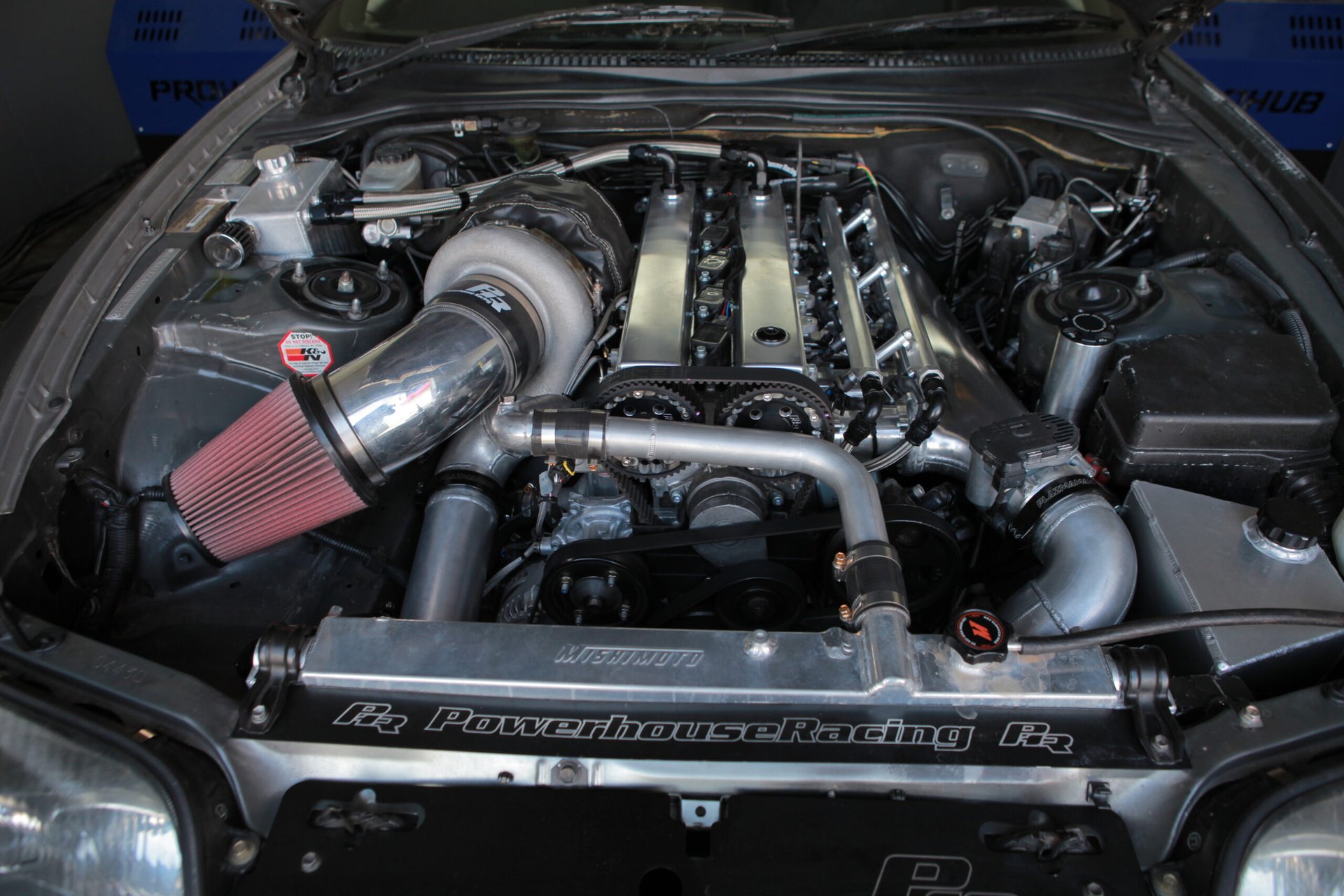
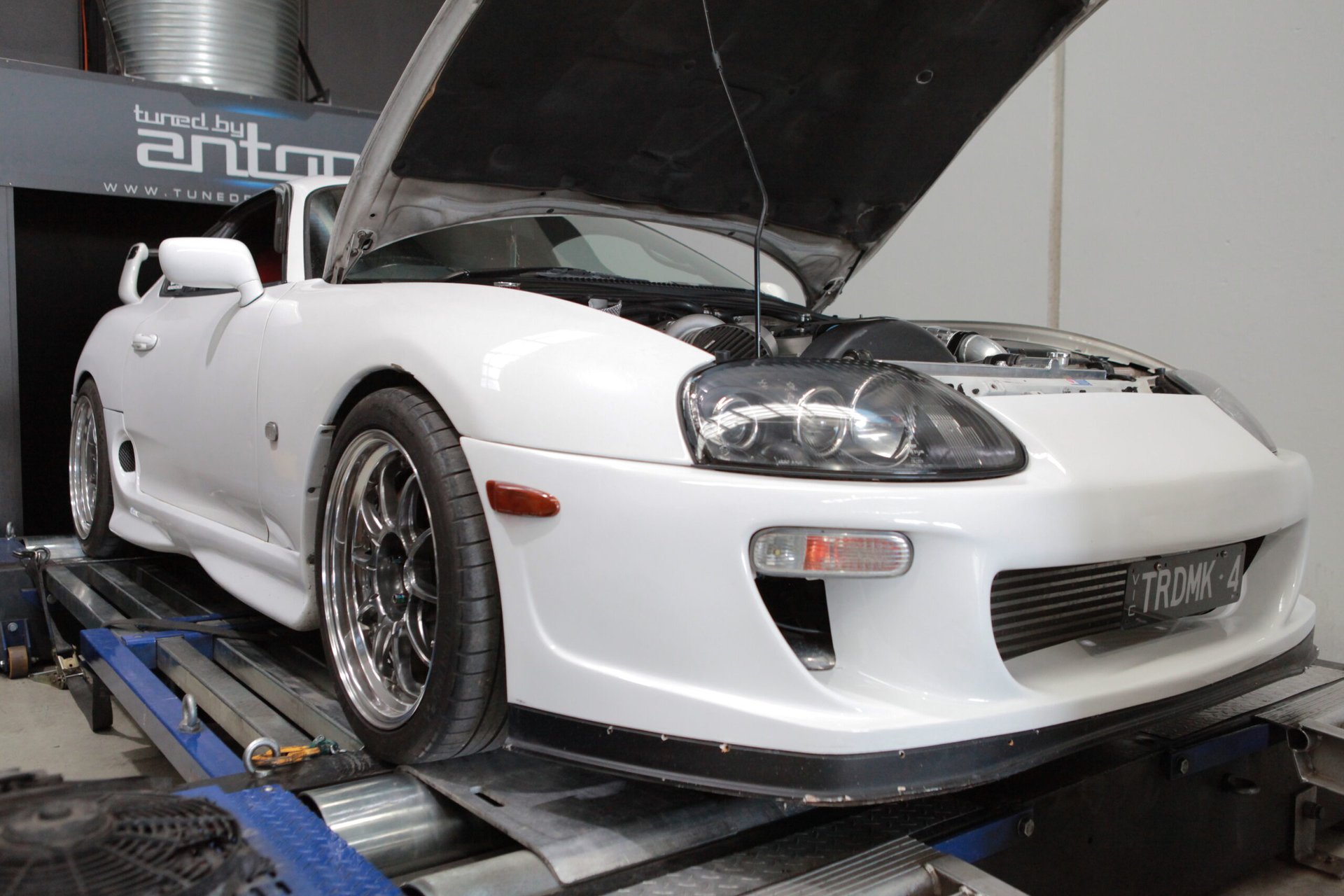
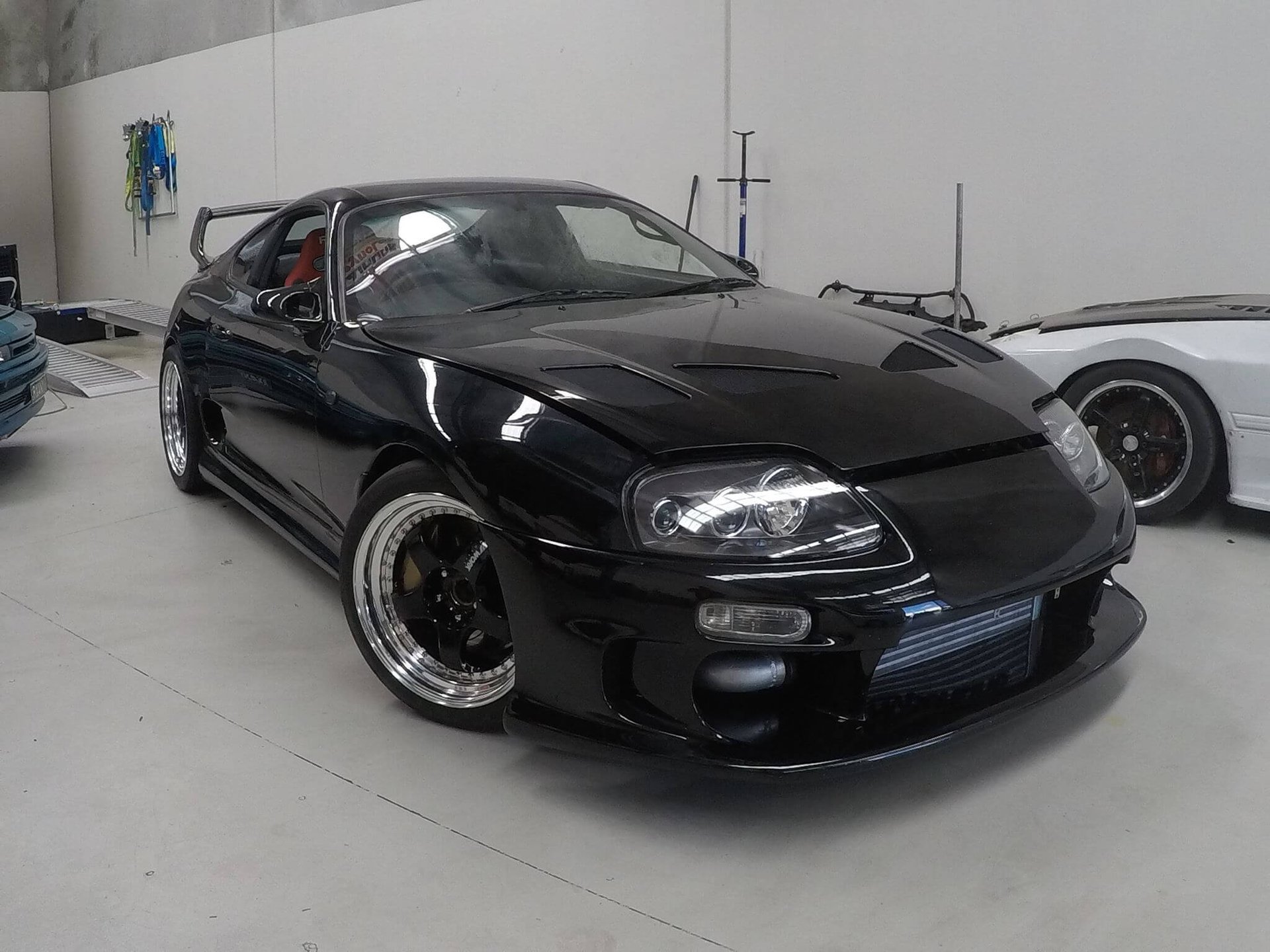
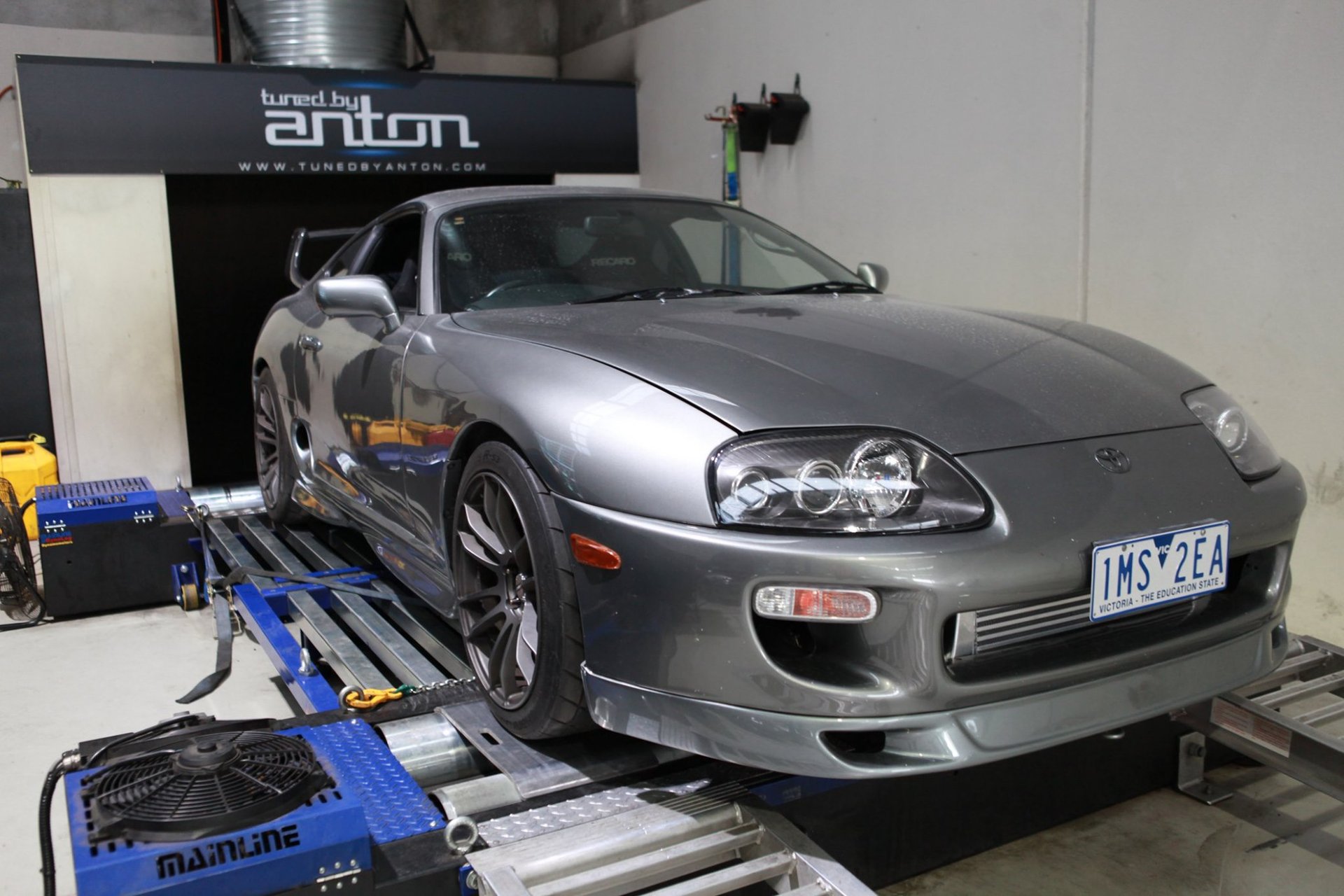
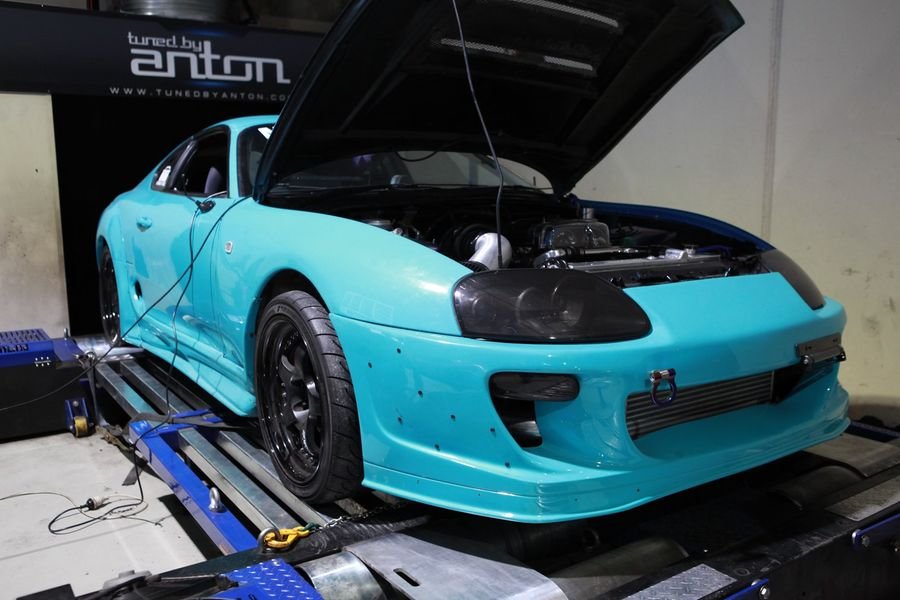
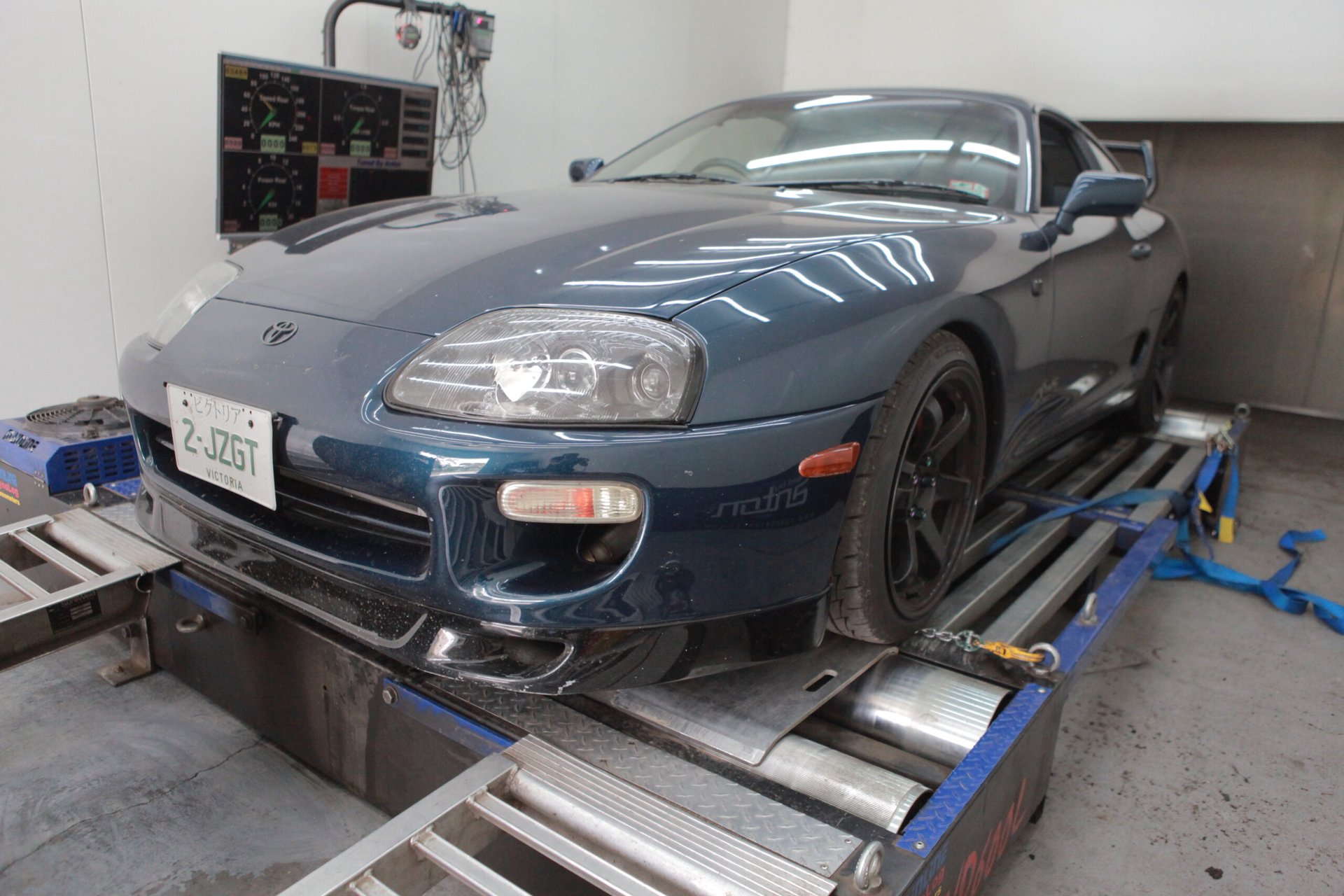
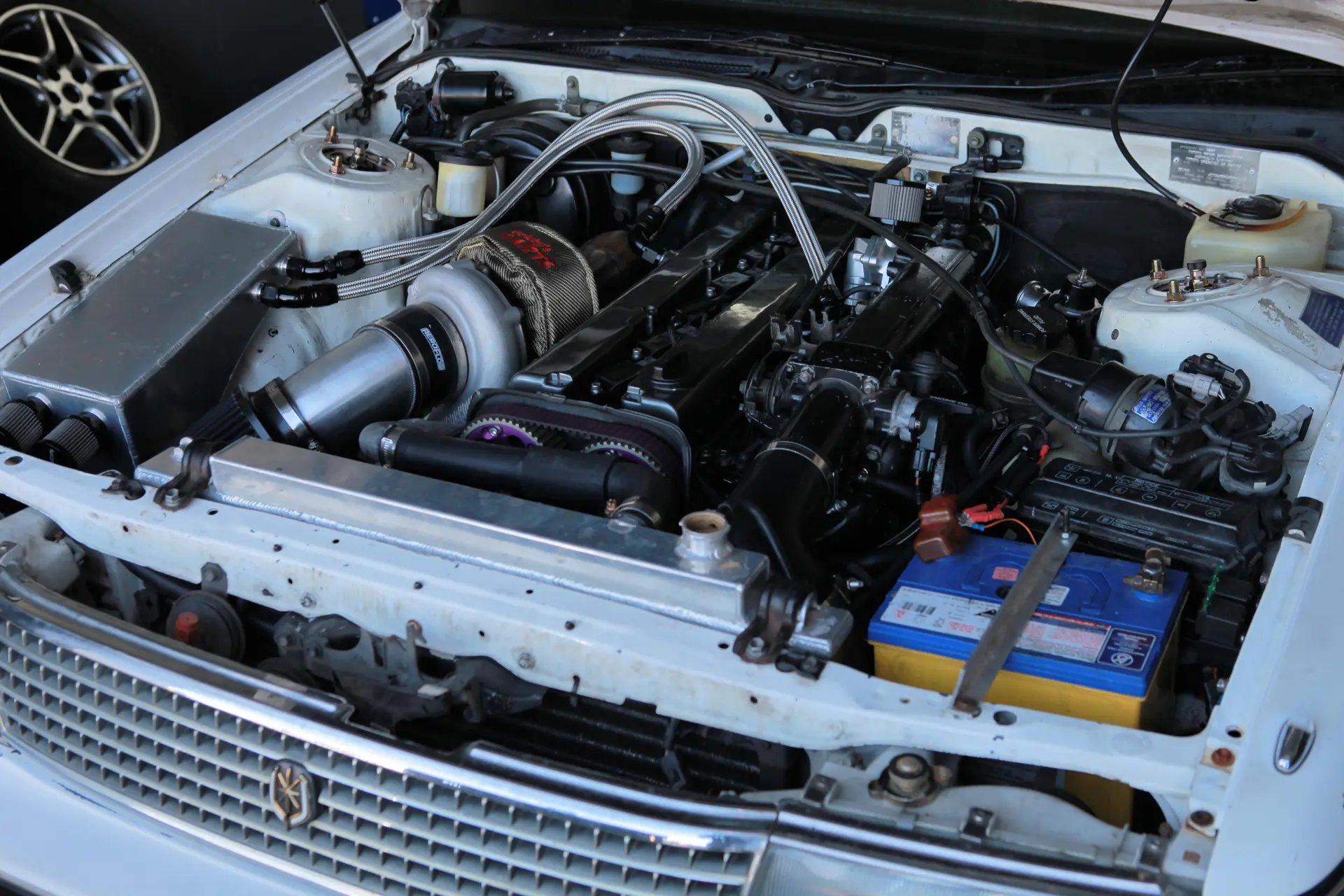
Models We Tune
Popular Toyota Models We Tune.
From the B58-powered A90 Supra to GR Yaris, N70 and N80 Hilux diesel and LandCruiser — we have hands-on dyno history with every Toyota platform listed here.
GET A QUOTE →Platform Overview
Tuning the Toyota Platform.
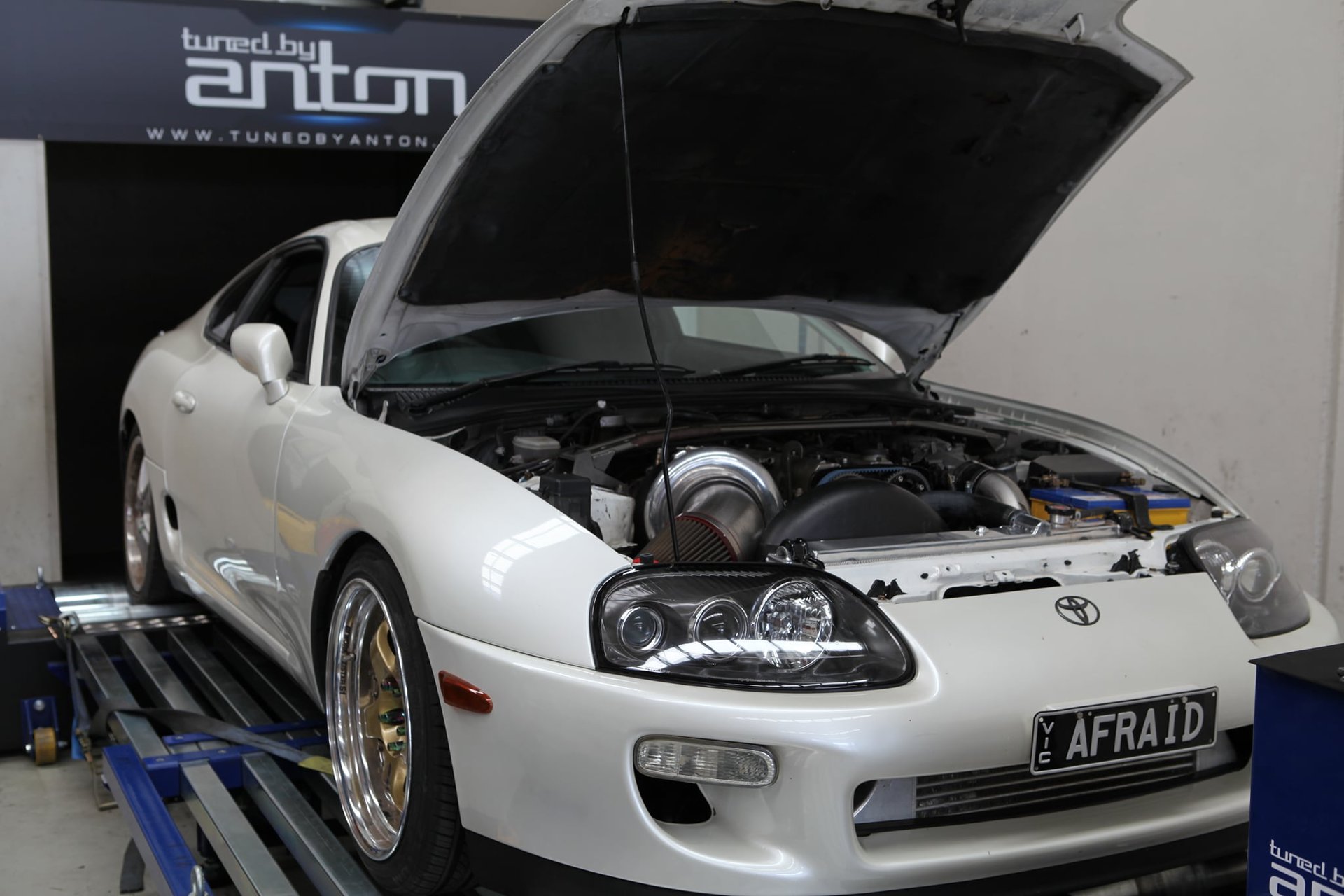
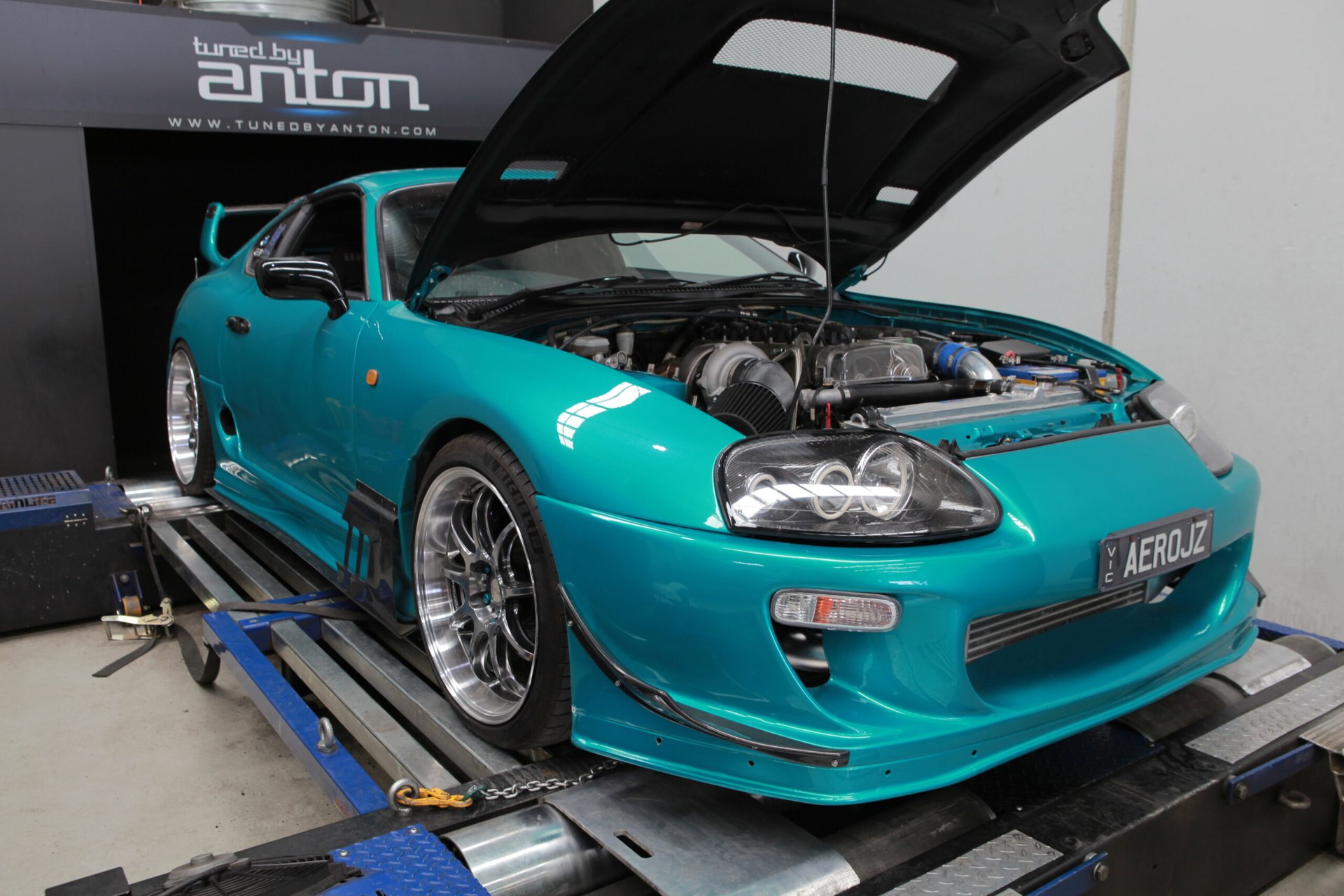
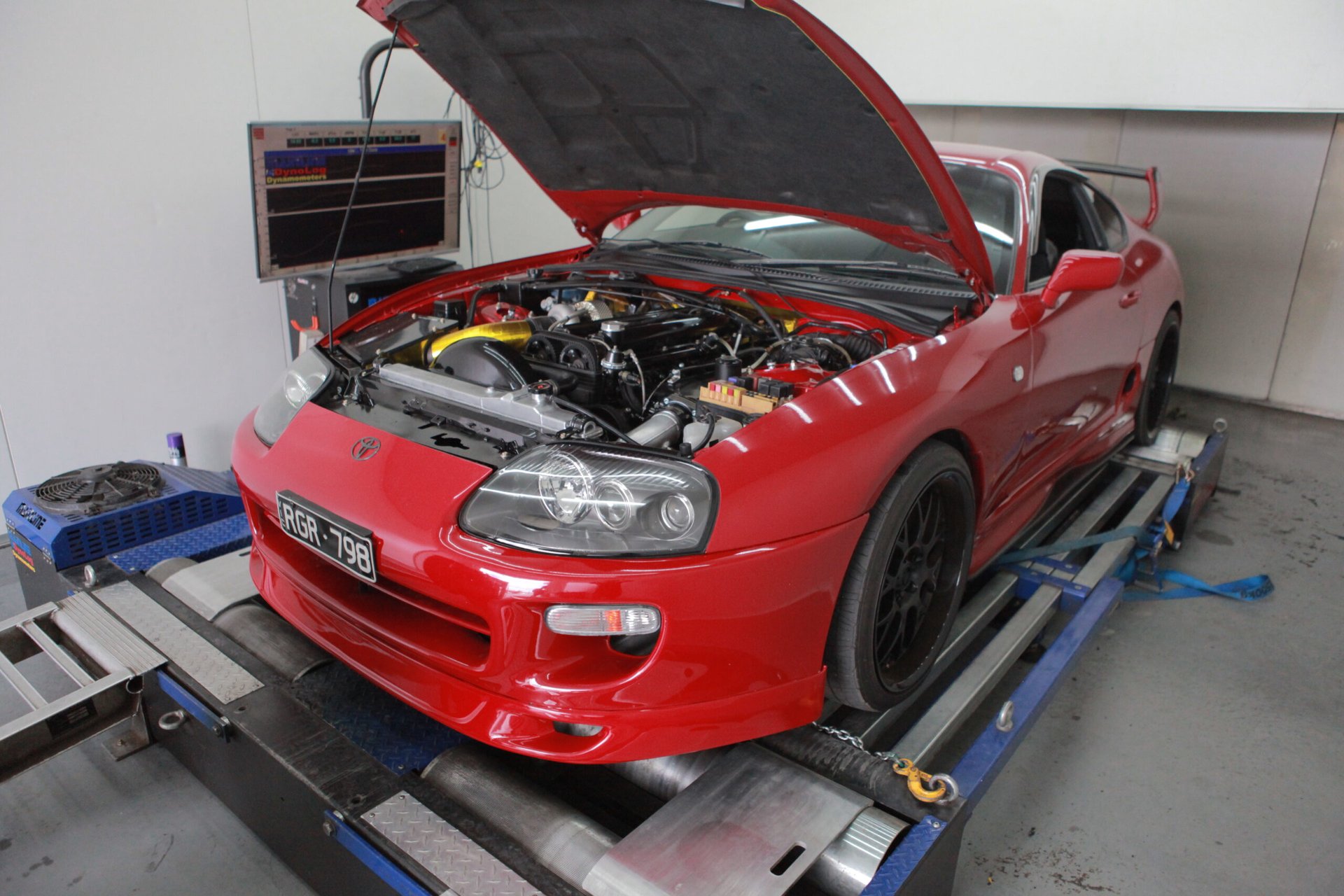
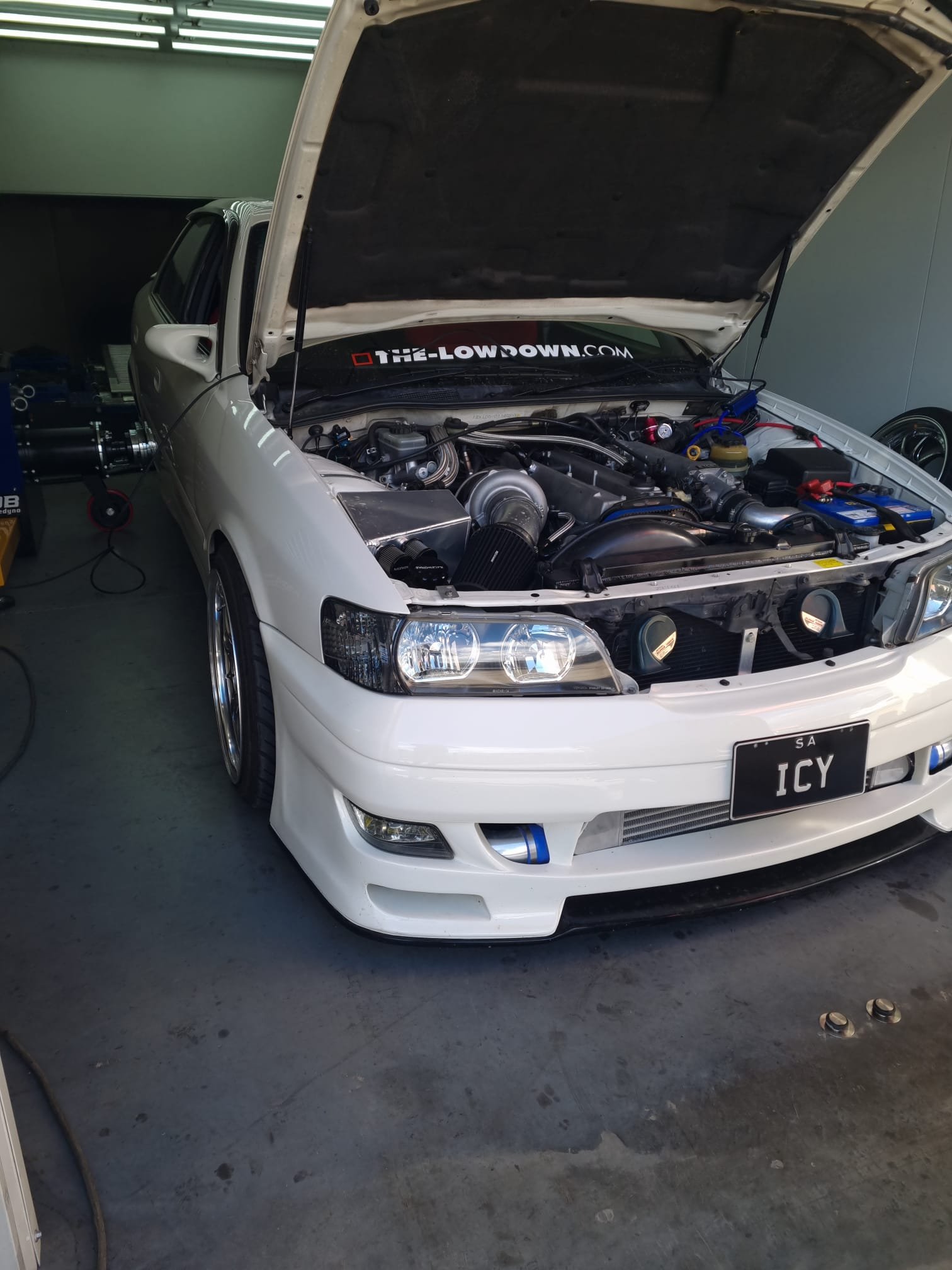
Toyota's Australian tuning market spans three very different segments. The 2JZ-GTE inline-six twin-turbo in the A80 Supra and JZZ/JZX Chaser/Soarer/Mark II remains one of the most celebrated tuning platforms ever built — over-engineered with a cast iron block, forged steel crank, and a robust head design that regularly sustains 400–500kW+ at the wheels on the original bottom end with supporting work. The factory sequential twin-turbo system is typically replaced with a single large-frame unit for Stage 2+ builds, with standalone ECU (Haltech, Link, Motec) providing full calibration freedom. Stage 1 on the stock twin-turbo 2JZ-GTE on 98 RON produces consistent, reliable results.
The modern highlight is the G16E-GTS 1.6L three-cylinder in the GR Yaris and GR Corolla. This is one of the most technically interesting small-displacement performance engines ever produced — it uses a variable geometry turbocharger (rare in petrol performance applications), bore-spray cooling, and a cross-plane crankshaft. The factory ECU calibration is set conservatively for durability across varied global fuel grades and market conditions. On Australian 98 RON with a custom Mainline dyno tune, Stage 1 on the G16E-GTS typically produces 220–235kW at the wheels from a factory 185kW base. The VGT (variable geometry turbine) requires careful calibration — poor-quality tunes that simply raise boost targets without managing the VGT geometry correctly can cause compressor surge.
The highest-volume Toyota tuning work at our workshop is diesel — specifically the 1GD-FTV 2.8L in the Landcruiser 70 Series, 200 Series, Prado 150, and HiAce, and the 2GD-FTV 2.4L in the N80 HiLux and Fortuner. The outgoing N70 HiLux (KUN26, 3.0L 1KD-FTV) remains common in the Australian market and responds well to the same approach. These are modern common-rail platforms with conservative factory calibrations driven by emissions and market segmentation. A 1GD-FTV Prado with a quality tune and supporting intake and exhaust is a genuinely different driving experience — particularly for towing, where the stock torque delivery is lazily calibrated in the 1500–2500 RPM range that matters most.
Typical At-Wheel Figures
Real Numbers. Mainline AWD.
At-wheel kW on 98 RON unless noted. Representative of results in our Epping workshop, though your car may vary.
| Engine / Models | Factory | Stage 1 | Stage 2 |
|---|---|---|---|
2JZ-GTE98 RON Supra A80, Soarer JZZ30, Chaser JZX100/90 | ~215 kW | ~288 kW | ~365 kW |
Iron block — handles Stage 2 on stock bottom end routinely. Standalone ECU recommended for Stage 2+. | |||
1JZ-GTE98 RON Chaser JZX100/90, Mark II, Soarer JZZ30 | ~175 kW | ~238 kW | ~305 kW |
Single-turbo VVT-i variant preferred for tuning. CT15B or single conversion popular. | |||
G16E-GTS 1.6T98 RON GR Yaris GXP210, GR Corolla | ~185 kW | ~228 kW | ~275 kW |
Variable geometry turbo — requires expert VGT calibration. Poor tunes cause compressor surge. | |||
FA24 NA98 RON GR86 ZN8, BRZ ZD8 | ~165 kW | ~178 kW | — |
Naturally aspirated — ECU gains modest. HKS/Blitz/Tomei turbo kit with custom tune recommended. | |||
1GD-FTV 2.8LDiesel Prado 150, LC200, LC70, HiAce GEN3 | ~140 kW | ~185 kW | ~218 kW |
Massive AU market. Towing torque at 1500–2800 RPM is the headline improvement. | |||
2GD-FTV 2.4LDiesel HiLux N80 (GUN/AN), Fortuner AN, Prado (GD6) | ~120 kW | ~158 kW | ~185 kW |
One of the most common dyno tunes in Australia. Tune dramatically improves daily driveability. | |||
Parts & Accessories
Toyota Tuning Parts & Accessories.
Toyota-specific performance hardware, sourced and fitted in-house.
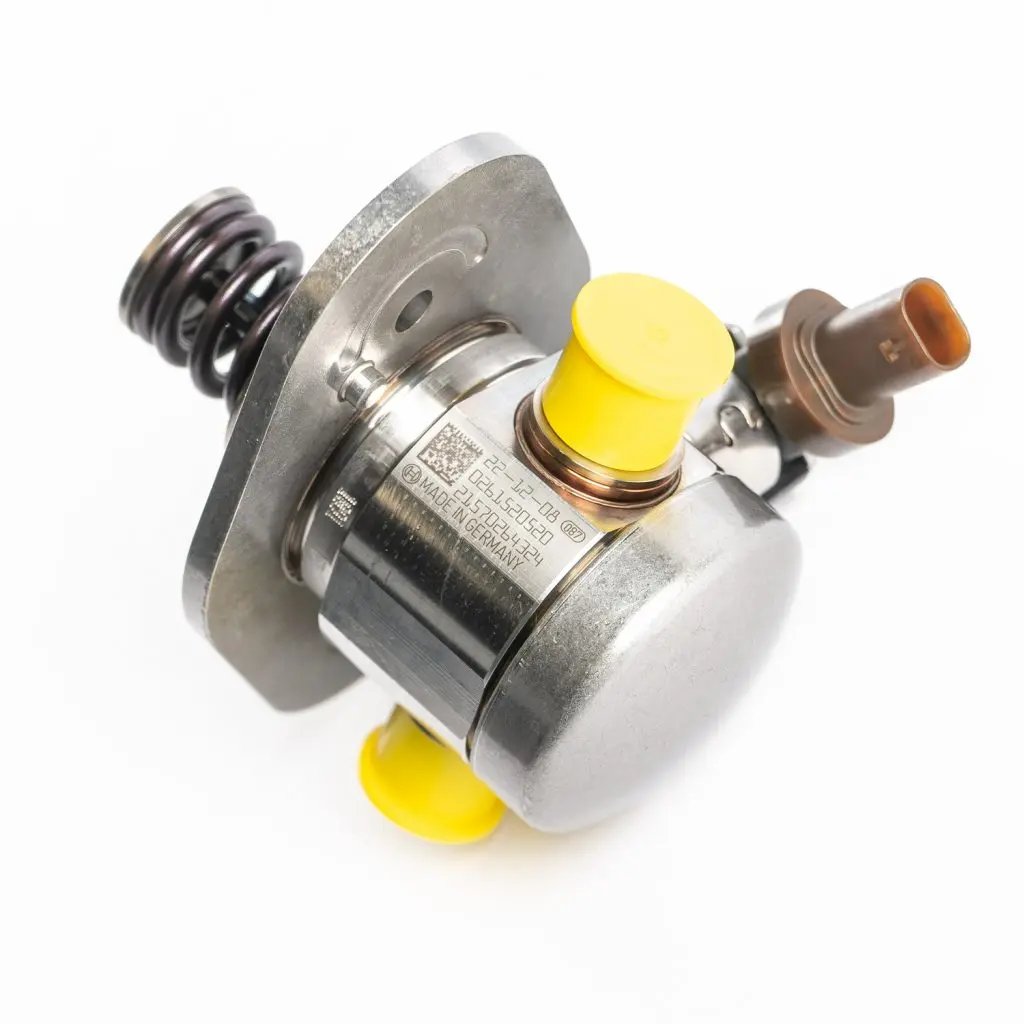
Bosch 0261520520/13518631642 MINI/BMW/Supra B46D/B58TU HPFP
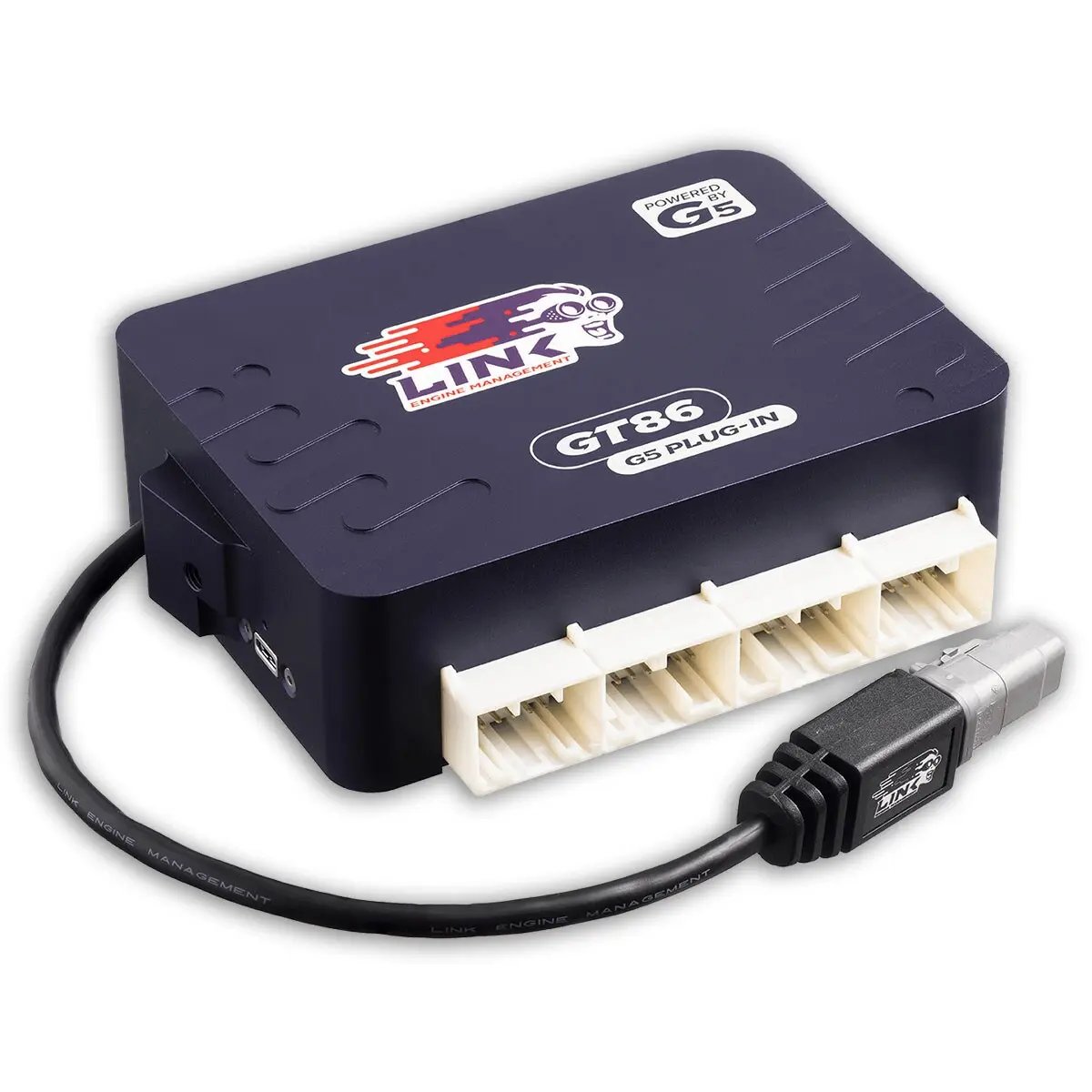
G5 ECU Plug-In - Toyota GT86/Subaru BRZ/Scion FR-S
R35 Coil Conversion Kit for Toyota JZ- Includes bracket , coils, connectors and harness
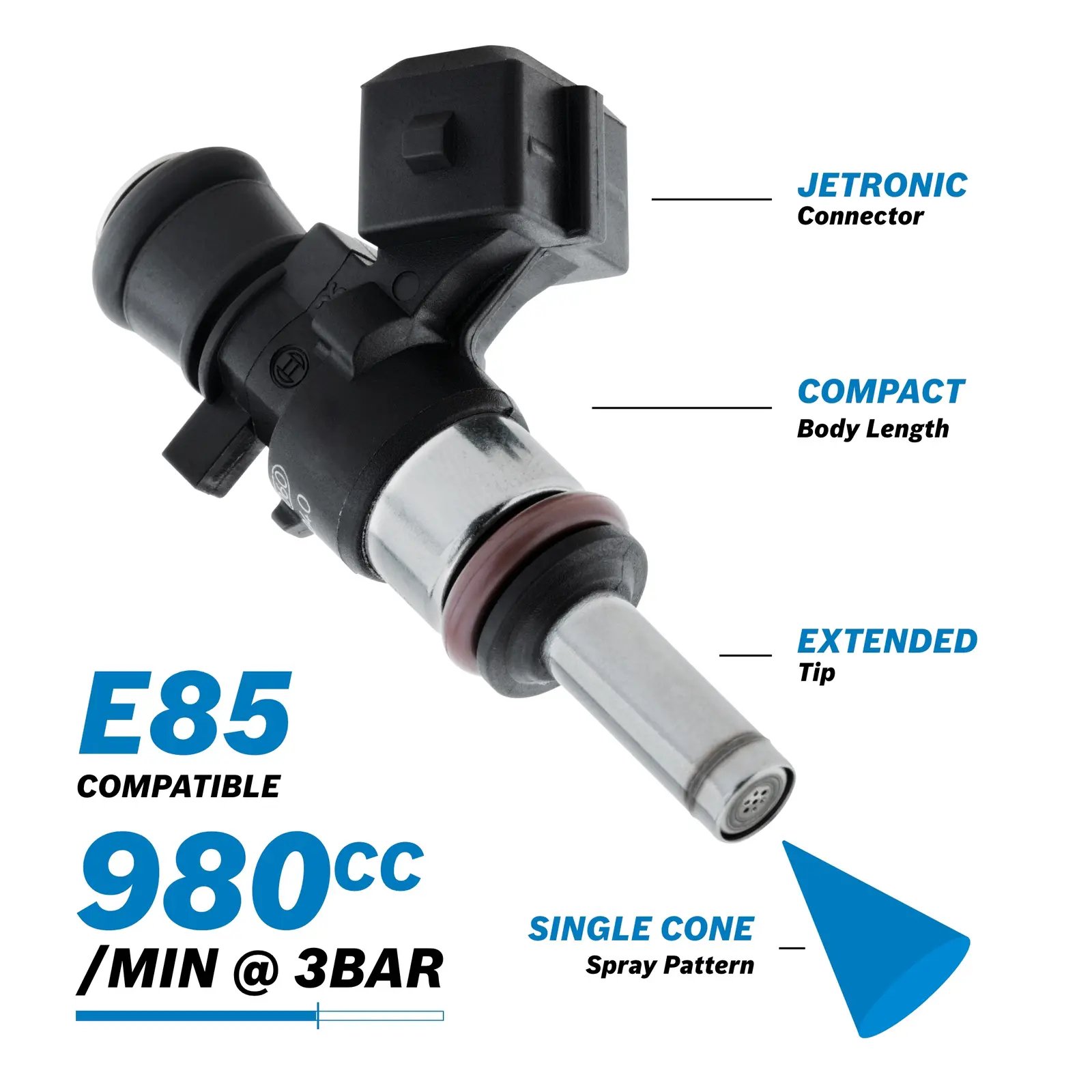
Bosch 980cc EV14 fuel injectors
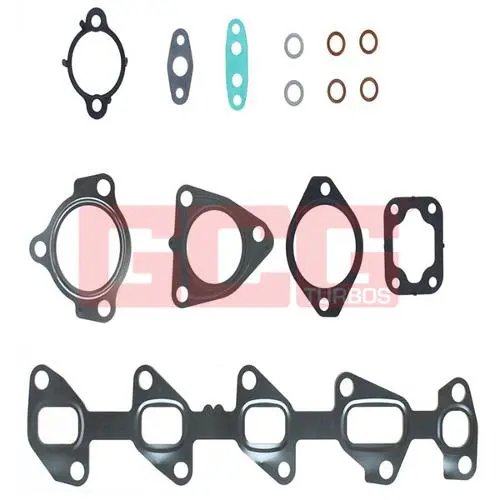
Permaseal Turbo Gasket Kit Fits Toyota Landcruiser VDJ79 1VD-FTV Inc. Manifold
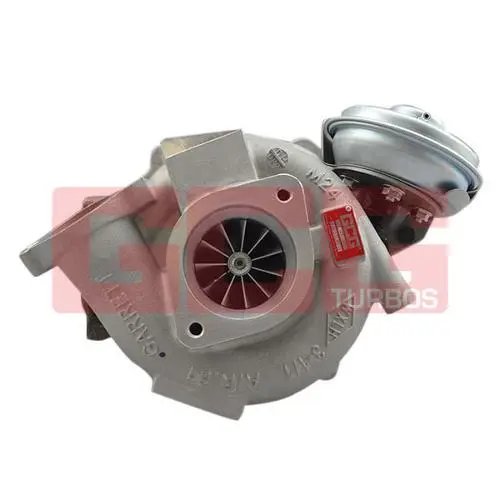
GCG TDX GTA2359V Turbo Upgrade Toyota Landcruiser VDJ79 1VD-FTV 2007>
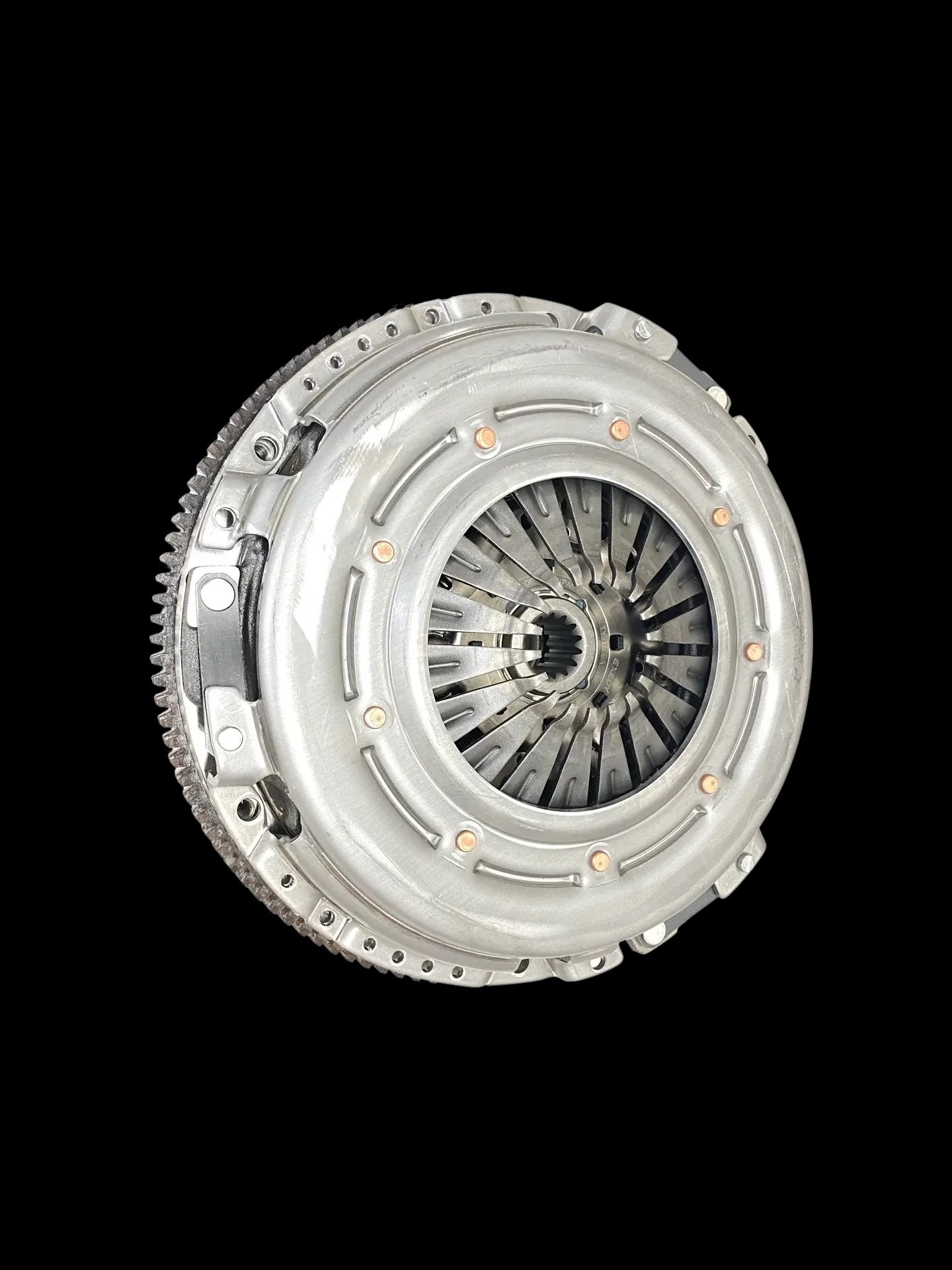
Toyota Landcruiser 76 Series (2007+) VDJ76 4.5 LTR V8 Diesel NPC 1300NM Performance Clutch
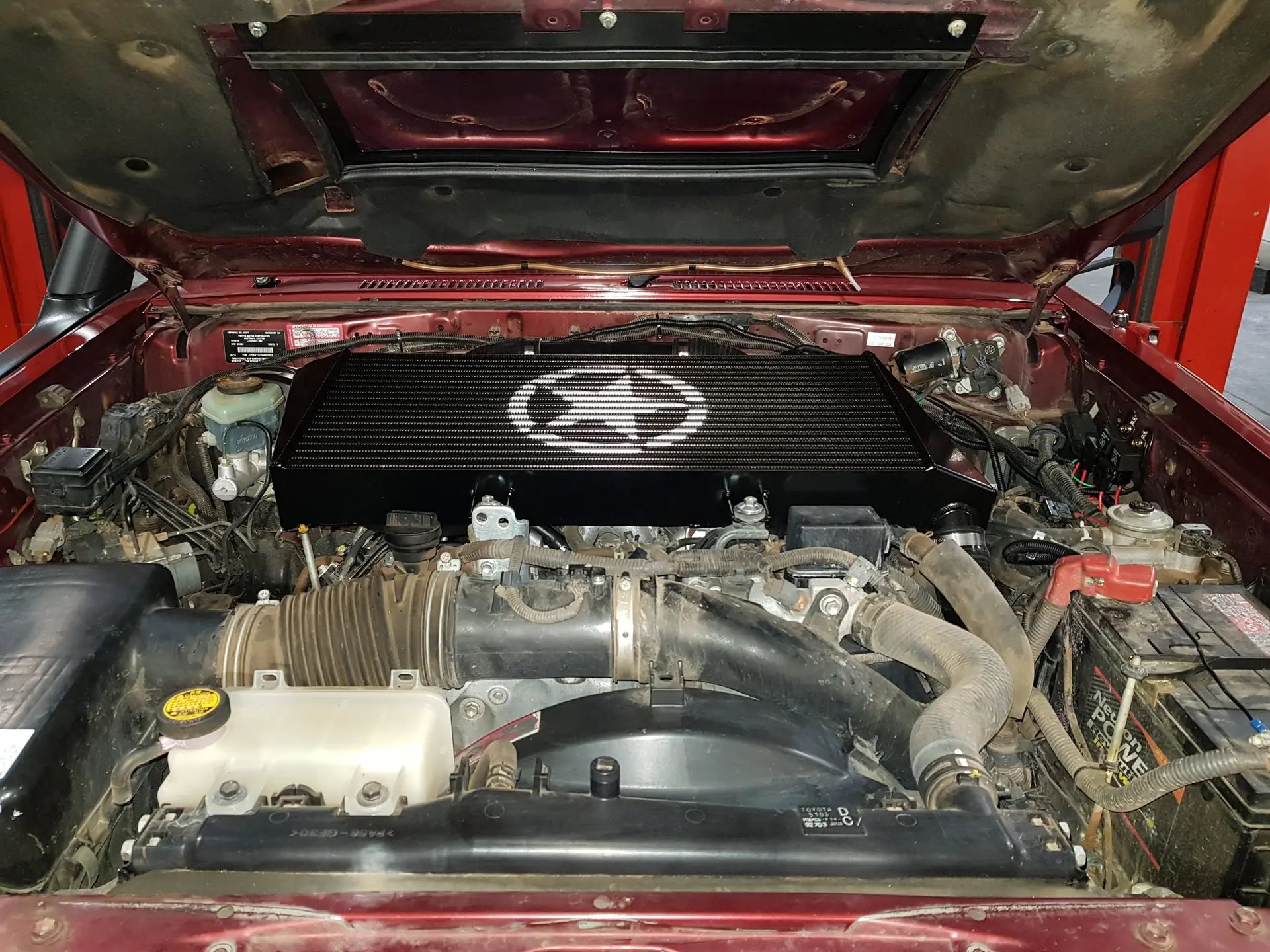
Toyota Landcruiser VDJ76/78/79 Series Twin Fan Ultimate V3
Toyota Tuning FAQs
Common Questions.
What ECU platforms do you tune Toyota on?
Toyota work in our workshop runs on Haltech, MoTeC, Link ECU and ECUTEK. Every calibration — factory ECU remap or standalone engine management — is developed on our in-house Mainline AWD dyno rather than loaded from an off-the-shelf file.
How much power can a GR Corolla or GR Yaris make on a Stage 1 tune?
A stock GR Yaris or GR Corolla with the G16E-GTS 1.6L three-cylinder makes approximately 185kW at the wheels. A Stage 1 ECU tune on our Mainline dyno typically takes this to 225–235kW — a 40–50kW gain with no hardware changes. The variable geometry turbocharger is the key to this platform; properly calibrating the VGT geometry alongside boost and ignition advance is what separates a quality Stage 1 from a poor one. Stage 2 with a high-flow intake and intercooler upgrade adds a further 35–45kW.
Is the 2JZ-GTE bottom end strong enough for high power?
Yes — this is the 2JZ's reputation and it's well-earned. The iron block with forged steel crank and cast pistons handles Stage 2 power levels (350–380kW at the wheels) on the original bottom end reliably. The stock pistons are the limiting factor for E85 high-boost builds rather than the crank or block. For builds targeting 400kW+ at the wheels, a piston upgrade (Wiseco, JE, CP) and rod bolts are the standard approach. The 2JZ head, with its twin-cam design and good port flow, rarely needs work until very high power levels.
How much does a HiLux diesel tune cost and what does it do?
A custom ECU tune for a HiLux 2GD-FTV diesel on our Mainline dyno starts from approximately $795 including the dyno session. The tune raises torque delivery in the 1500–3000 RPM range, removes smoke limiters, improves throttle response, and lifts peak power from approximately 120kW to 155–160kW at the wheels. Most HiLux owners report the improvement is felt most strongly during highway overtaking and when pulling a load — the stock HiLux feels sluggish in these conditions, and the tune directly addresses that laziness.
What's the difference between a Prado 1GD-FTV and 2GD-FTV for tuning?
The 1GD-FTV 2.8L four-cylinder (in 150 Series Prado, 200 Series LandCruiser, and LC70) is the stronger engine with more displacement and more headroom. Stage 1 takes it from approximately 140kW to 185kW at the wheels. The 2GD-FTV 2.4L (in HiLux, Fortuner, and some Prado variants) is smaller but responds proportionally — from around 120kW to 155–160kW. Both benefit from the same approach: custom dyno tune with EGT monitoring for towing safety.
Can you tune a naturally aspirated GR86 / Toyota 86?
The GR86 (ZN8) and BRZ (ZD8) use the naturally aspirated FA24 2.4L boxer — ECU tuning alone adds approximately 10–15kW at the wheels from a stock 165kW base, primarily through ignition advance and throttle calibration. This is meaningful but modest. For significant power gains, a turbo or supercharger kit combined with a custom dyno tune is the correct path. We develop calibrations for several popular 86/GR86 forced induction setups — HKS GT2 supercharger, Harrop/TRD supercharger, and turbo kits — all on the Mainline dyno.